Redefining Logistics: AI-powered Intelligence and Real-time Decisions
Author: Muthukumaraswamy B, Director - AI Engineering, Searce
In an industry where timing is everything, logistics companies are under increasing pressure to operate smarter, deliver faster, and plan better. But even the most forward-thinking platforms often run into challenges like fragmented data, sluggish systems, and decision-making delays.
At Searce, we partner with logistics solvers who are rethinking the future of digital supply chains. We help futurify their operations by deploying advanced AI solutions, cloud-native architectures, and real-time analytics, turning complex challenges into intelligent outcomes.
One recent collaboration with a fast-growing logistics platform highlights this transformation. Despite having scale, ambition, and strong market demand, they were held back by disconnected systems, inefficient queries, and manual workflows that couldn't scale.
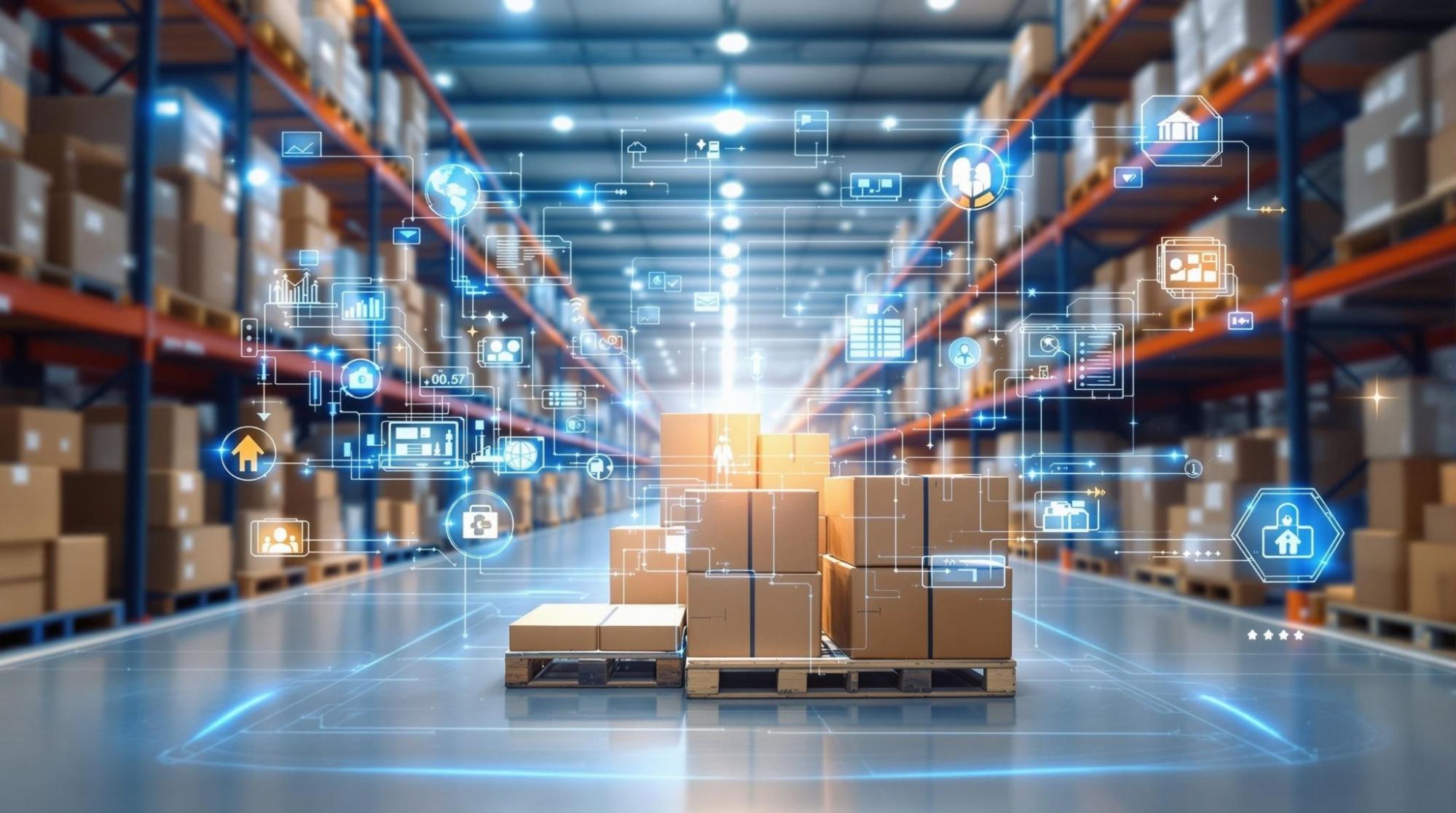
Searce stepped in as a cloud and AI transformation partner, leveraging AWS services and applied machine learning to shift their operations from static, reactive systems to a real-time, intelligent decision-making engine.
This is how we help logistics innovators move from challenges to outcomes—by solving with purpose, becoming future-ready with tech, and delivering intelligent outcomes that unlock exponential value.
The visibility gap that slowed everything down
Our client, a fast-growing logistics and supply chain analytics company, was seeing a sharp increase in data volume. Over 1 TB of data was being generated every month, across shipments, customer behavior, route histories, equipment telemetry, and more.
The problem? All that data was scattered.
Different teams had access to various tools. There were inconsistencies, redundancies, and missed insights. Data wasn't flowing into a central system, because of which teams were always reacting and never truly ahead.
To complicate things further, their client-facing recommendation engine was still largely manual. This resulted in slower response times, a lack of personalization, and a noticeable drop in customer satisfaction.
What they truly needed was a solver approach to unify their data, improve their decision-making processes, and unlock intelligent outcomes that scale with their growth.
Building a foundation for intelligence on AWS
We started by building a data lake on Amazon S3, architecting a modern data lake to centralize all operational logistics data from delivery attributes and constraints to real-time location intelligence. This scalable foundation allowed us to ingest high-velocity data streams and improve their logistics operations for dynamic, ML-driven decision-making.
To empower teams across functions with real-time access to this data, we integrated Amazon Athena, enabling serverless, interactive querying directly on top of the lake. This eliminated dependency on batch pipelines and reduced latency for analytics consumers across the board—whether analysts, ops leads, or business users.
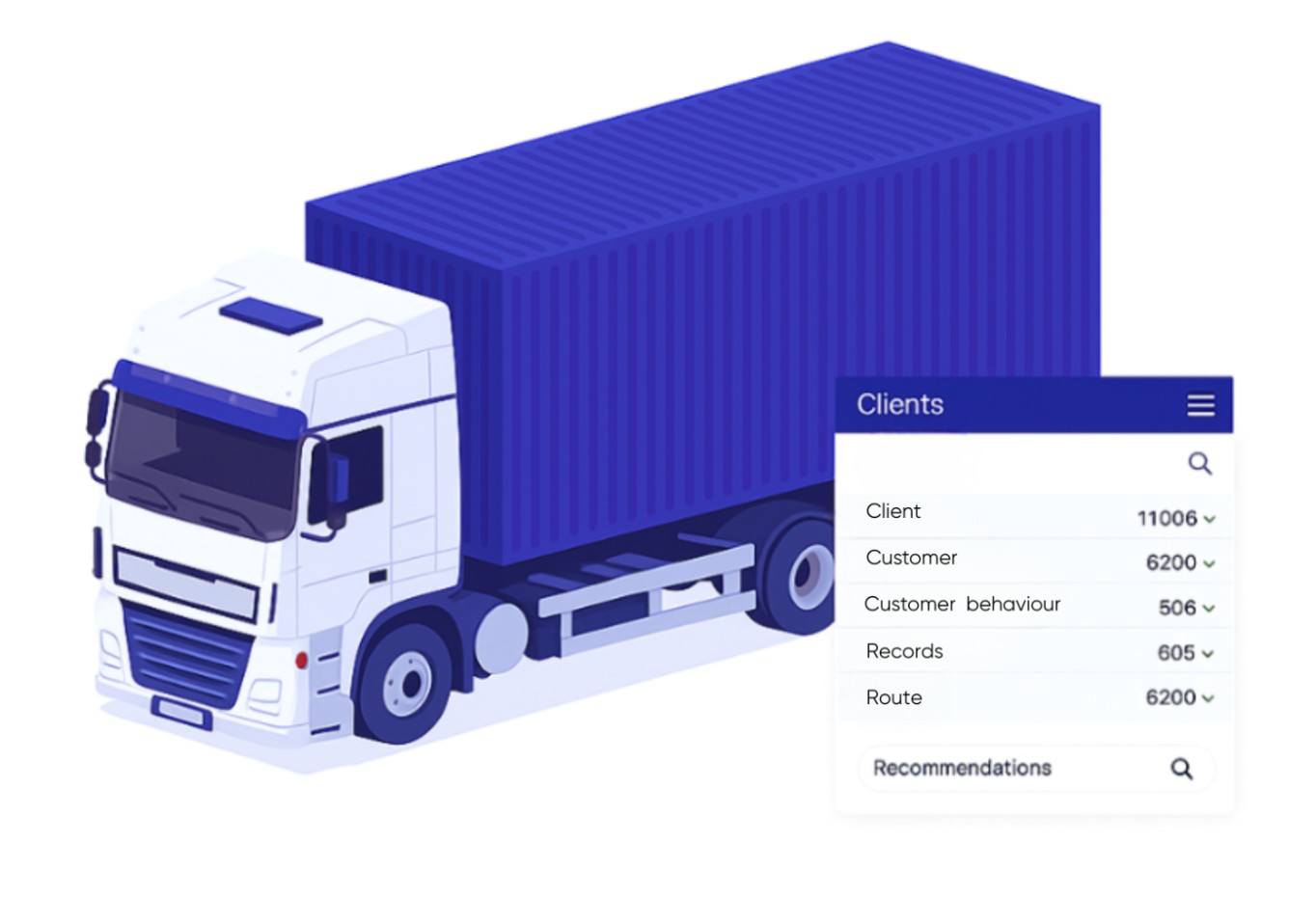
On the visualization front, Amazon QuickSight allowed us to surface insights that weren't just accessible but actionable. We delivered role-based dashboards with drill-downs, anomaly alerts, and KPIs that aligned directly with operational metrics, helping stakeholders move from insight to action instantly.
The real innovation came from the intelligence layer we built on top: a GenAI-powered conversational interface, underpinned by models deployed via Amazon SageMaker and exposed through a secure API layer hosted on AWS Elastic Beanstalk. This layer acted as a contextual solver—capable of interpreting natural language queries such as "Where are delays expected tomorrow?" and returning predictive, visual responses with supporting evidence.
To support this interface, we developed custom ML pipelines that handled dynamic route optimization, delivery grouping, and vehicle allocation. These models ingested live constraint data—including vehicle availability, delivery priorities, and load characteristics—to recommend optimized logistics plans. Our heuristics engine factored in utilization thresholds, vehicle ownership, and cost-benefit scenarios, delivering intelligent outcomes that balanced operational efficiency with customer constraints.
This wasn't just about analytics—it was about embedding intelligence directly into the flow of day-to-day decisions. We didn't just build a platform; we helped improve the logistics process, turning complexity into clarity and reactive operations into proactive optimization.
Adding foresight with predictive maintenance
With real-time visibility in place, we turned our focus to prediction.
Using Amazon SageMaker for model training and Amazon Bedrock for GenAI integration, we built predictive maintenance capabilities that allowed the platform to identify potential equipment failures in advance. Instead of reacting to problems, they were able to get ahead of them, minimizing downtime, improving SLAs, and reducing emergency escalations.
And because it was all built on AWS, we ensured the entire system remained secure, observable, and compliant—leveraging IAM for access control, CloudWatch for monitoring, and CloudTrail for audit logging.
Logistics planning, reinvented with ML
In parallel, we worked on optimizing one of the most operationally critical workflows in logistics: delivery planning.
We used a mix of machine learning and heuristics to solve three major challenges:
-
Route Optimization
Using real-time traffic data through APIs and ML-powered logic, we enabled the system to calculate the most efficient delivery routes on the fly, considering delivery windows, product types, vehicle constraints, and more.
-
Delivery Grouping
Deliveries were clustered not just by proximity, but also by handling requirements (dry, frozen, ambient), weight/volume, and customer preferences. ML models helped refine grouping strategies dynamically over time, learning from what worked best in past scenarios.
-
Vehicle Allocation
The platform could now make intelligent decisions between owned and market vehicles—maximizing utilization, splitting loads when needed, and even suggesting the best vehicle type based on predicted load characteristics.
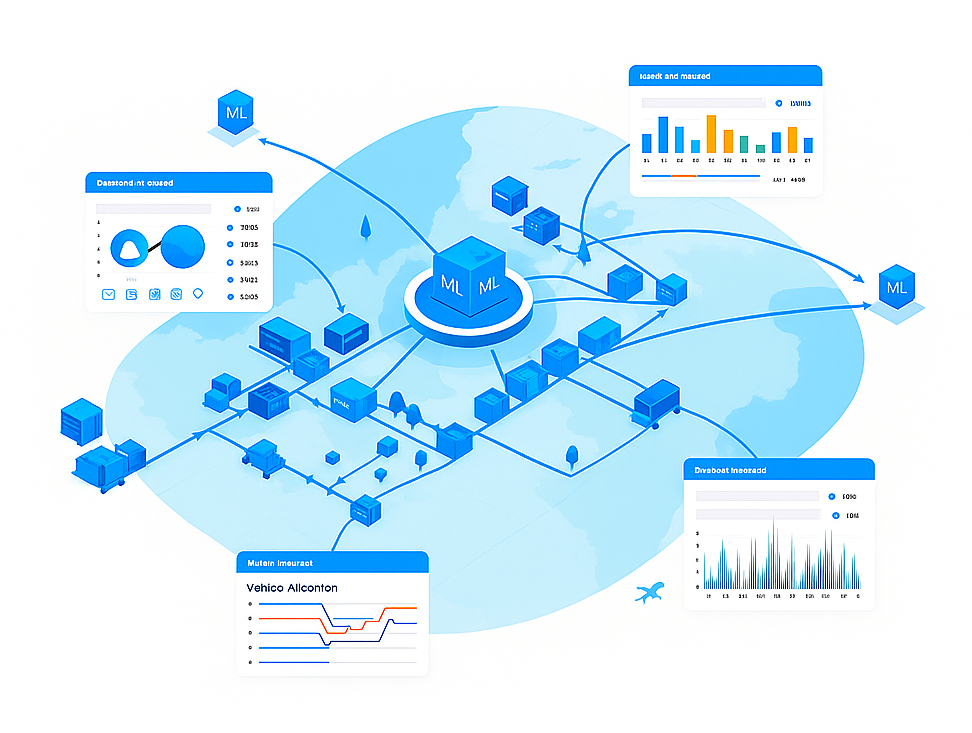
What used to take hours of manual planning became a near-instant, data-driven recommendation. And as conditions changed, new orders came in, a vehicle became unavailable—the system adapted in real-time.
The outcomes: speed, scale, and smarter decisions
This wasn't just a tech upgrade—it was a complete transformation in how the logistics business operated, powered by a solver mindset and driven toward intelligent outcomes:
- Unified and accessible data: No more fragmented data across silos—enabling a single source of truth.
- Improved query performance: Unlocking real-time insights and faster decision-making.
- Highly responsive: End users—operations teams, planners, and leadership—could interact with the platform like a trusted colleague, asking questions and receiving contextual, AI-powered responses.
- Increased customer satisfaction: Personalized, timely recommendations driven by intelligent systems.
- Cost optimization: Infrastructure costs were optimized through serverless architecture and auto-scaling, creating efficiency without compromising performance.
But most importantly, the platform had been made future-ready—not just built to scale technically, but ready to expand strategically. It was now equipped to serve more customers, in more regions, with greater reliability, agility, and insight.
A new era of logistics intelligence
What this project reinforced for us is that logistics isn't just a process challenge; it's a data and intelligence challenge at its core.
And solving it doesn't come from simply adding more dashboards or static reports. It takes a solver mindset: building systems that think, adapt, and respond. Systems are designed with awareness of operational realities and built for strategic advantage.
With AWS as our foundation and AI as the enabler, we helped this logistics platform futurify its operations, moving from being data-rich to truly decision-ready.
This is where the industry is heading: smarter routing, predictive visibility, and AI that empowers your teams rather than overwhelms them.
If you're exploring what the next evolution of your logistics platform should be, it may not be about adding more features; it might be time to redefine how your data powers intelligent outcomes.
At Searce, we're here to help you make that leap.
About the author:
Muthukumaraswamy is a seasoned solver in the AI and machine learning space, with over 17 years of experience in architecting intelligent, scalable systems. At Searce, he leads AI engineering initiatives spanning Generative AI, Large Language Models, and ML platforms, helping enterprises move from experimentation to production with confidence.
His work is grounded in delivering intelligent outcomes through real-world AI solutions that are robust, ethical, and designed to scale.